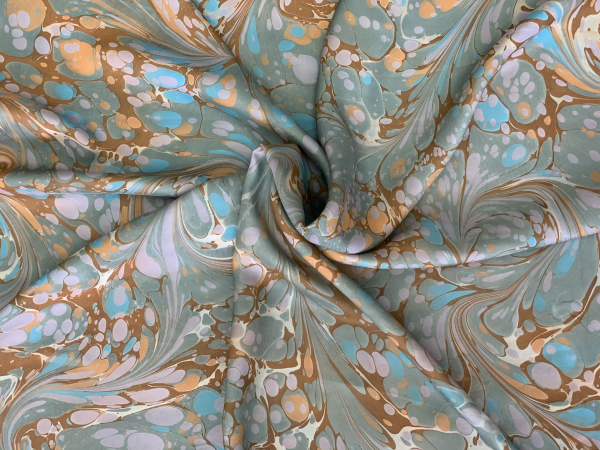
An ancient art shaped on water, centuries in the making.
Ebru is an art with deep roots stretching from Central Asia to the Ottoman Empire. Meaning "cloud-like," it is created by dropping natural pigments onto a water surface and shaping them with needles and combs.
Every ebru piece is a singular creation of its moment. Water currents, pigment density, air humidity — all contribute to that unique pattern. Not even the artist can recreate the same design.
Water is prepared with a natural thickener called gum tragacanth, which allows pigments to float on the surface.
Natural pigments are mixed with ox bile. Each colour takes its own form the moment it touches the water.
Needles, combs or brushes gently shape the pigments. The pattern emerges from the artist's imagination and the will of the water.
Paper or fabric is gently laid on the surface to lift the pattern. This can only be done once.
Ebru was inscribed on UNESCO's List of Intangible Cultural Heritage of Humanity in 2014. Lavinia exists to keep this heritage alive and make it a part of the modern world.